Custom Shoulder Bolts
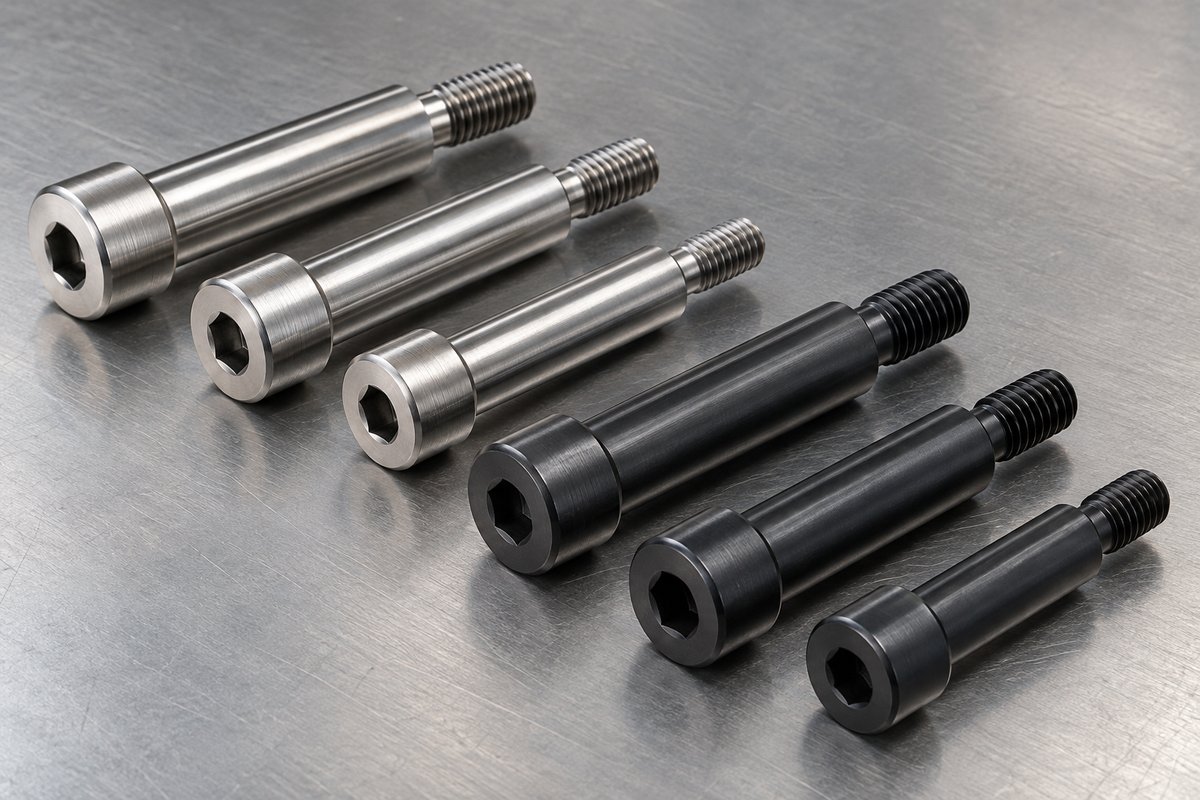
A shoulder bolt (shoulder screw) has a precision unthreaded cylindrical shoulder between the head and the thread. The shoulder acts as a shaft or locating pin — for pivots in levers and links, rollers and pulleys, and for locating in dies and fixtures.
Standard vs custom shoulder bolts
Socket head shoulder screws are standardized in ISO 7379 and ASME B18.3, with shoulder tolerances such as f9. A custom part is needed when:
- The shoulder diameter or length is non-standard
- A tighter shoulder tolerance is required (h7, g6…)
- The thread length or thread type must change
- The material must be 316 stainless, titanium or a heat-resistant steel
- The head must be thinner or larger, or use a different drive
How they are made
| Feature | Typical process |
|---|---|
| Shoulder | Turned, then ground (e.g. centerless) for diameter and finish |
| Thread | Rolled or cut |
| Head | Headed or turned; hex socket formed or broached |
| Heat treatment | Alloy steels quenched and tempered to the required grade |
What to specify
- Shoulder diameter and tolerance, length and tolerance, surface finish
- Concentricity of shoulder to thread and squareness of the head face, if required
- Thread size and length, undercut at the shoulder
- Material, hardness or property class, and finish
FAQ
What shoulder tolerance can you hold?
It depends on diameter, length and material, so we confirm it from the drawing. Tight tolerances are quoted with ground shoulders.
Can you make stainless steel shoulder bolts?
Yes — 304, 316 and 17-4PH among others. Specify any strength or hardness requirement on the drawing.